

THE LONGVIEW
The Annual Test
by Eduardo Joffroy
On Wednesday, the most important trade meeting of the decade lasted about as long as a business conference call. The United States, Mexico, and Canada met — virtually — for the USMCA’s joint review, and Washington said no. Not no to the treaty: no to renewing it for sixteen more years.
The agreement stands. The guarantee is gone. From now on, the continent’s trade pact gets reviewed every year, like a line of credit, until 2036.
The signal says North America just lost its certainty. The honest reading is different: certainty is never certain where there is no trust. Treaties do not protect what nations stop building. Mexico and Canada arrived with signed proposals to extend for sixteen years; the United States arrived with a list of grievances. The good inside the bad: an agreement you must earn every July is worth more than one you inherit and forget.
Say the full cost, without makeup: no CFO plans a twenty-year plant on a twelve-month treaty. Annual review makes patient capital more expensive, and patient capital is the kind that builds. That is the real damage, and denying it would be lying.
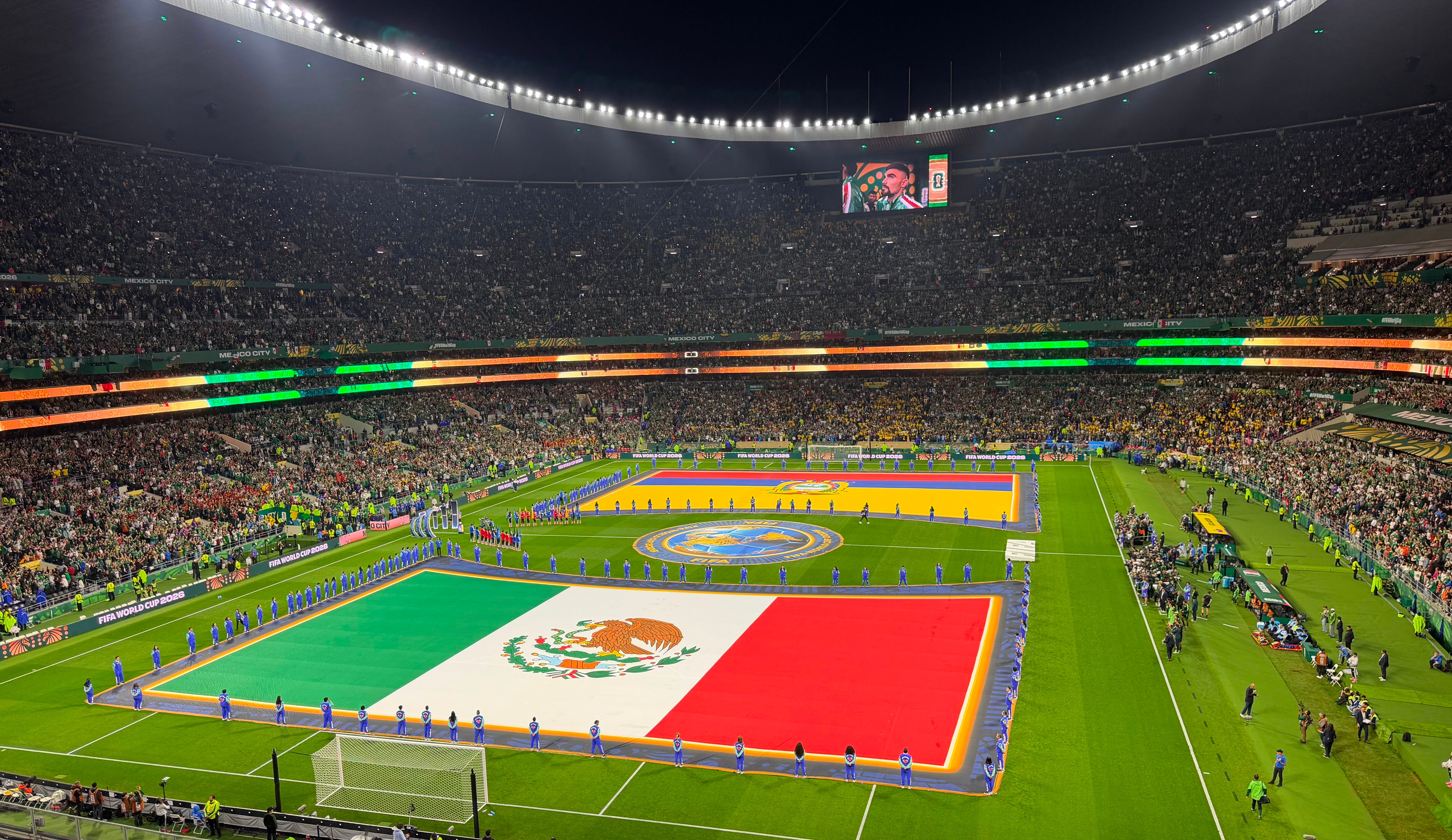
But the answer to short paper is long concrete. The same week the governments could not renew the paper, the continent renewed itself the old way. Canada won. Mexico won. The United States won. Not a metaphor: the World Cup scoreboard — three hosts in the Round of 16 for the first time, zero goals conceded.
Remittances hit their high for the year: $5.6 billion in a single month. Data centers keep landing in Querétaro. The peso barely blinked: 17.47 on Friday, as if the news of the century were paperwork.
And that same night of victory, Mexico showed the other side of the coin. One million four hundred thousand people went out to Reforma to celebrate a goal, and four of them never made it home. (I was there.) I saw a people’s desperation to feel proud of what is theirs — and I saw that no one contained the crowd, that security stayed on the perimeter. A people that concentrates all its emotion into a single moment is a people owed too many reasons for pride. That debt is not paid with celebrations: it is paid by building a country that gives reasons for pride every month — and the infrastructure to celebrate them without costing lives.
There is the lesson the negotiators have not yet learned: this continent’s integration does not live in the treaty. It lives in the factories, the families, the stadiums, and the power grid. The treaty recognizes it and empowers it; it does not create it.
And a proposal. This treaty needs more hands than governments alone: the private sector at the design table, and allied nations that have walked this road before. It needs to go beyond trade — to take seriously the realities of the three countries in the economy, in society, in security, in education, in potential, and in how we connect to the world.
This is not the North America of twenty years ago, or of ten. It is a singular moment, and it demands different thinking: specific committees with clear domains, where nothing is left out and the seats belong to experts, not quotas. Less politics. More craft and more vision.
The treaty stopped being a guarantee and became a test. Good. Guarantees lull continents to sleep; tests wake them up. Every July we will have to prove — with collaboration, with alignment, with work, with jobs, with energy, and with vision — that this three-nation partnership pays. Not a humiliation. A discipline.
Nothing is forever. Knowing that, we owe each other care, and care begins with telling the truth: Mexico today stands distant from its northern neighbors on what weighs most — security, education, financial access, rule of law, corruption, impunity.
Naming it is not betrayal; it is the first act of building. A continent that earns its treaty every year outlasts one that only signed it.
AFFAIRS OF THE WEEK
TRADE & POLICY
The architecture that lets goods, capital, and trust cross three borders — and where it is cracking.
The United States declines to renew the USMCA; the annual-review era begins. On July 1, the USMCA Free Trade Commission held its mandated joint review — a virtual meeting of Ambassador Jamieson Greer, Secretary Marcelo Ebrard, and Minister Dominic LeBlanc. The United States did not agree to renew the agreement in its current form; as a result, the treaty is not renewed, though it remains in force. Article 34.7.4 now triggers annual joint reviews every year until the parties agree on an extension or the agreement expires on July 1, 2036. Mexico and Canada each confirmed support for a sixteen-year extension; Washington answered with its ledger of deficits and grievances (USTR, Jul 1).
Mexico’s answer: nobody is leaving, and the first annual review already has a date. On July 2, Ebrard laid out the rules of the new game: leaving the treaty requires six months’ notice, and no country has expressed any intent to give it. The third bilateral round with the United States — the week of July 20, in Mexico City — will function as the first annual review. Mexico will arrive with three asks: a common agenda to reduce external dependence, defined timelines for the annual reviews, and clear processes (Secretaría de Economía / mañanera, Jul 2).
CAPITAL & INDUSTRY
Where the money is voting — and what it is voting against.
U.S. hiring cools; the Fed doesn’t blink. June nonfarm payrolls added just 57,000 jobs (consensus expected ~115,000), with April and May revised down by a combined 74,000. Unemployment fell to 4.2% — but for the wrong reason: labor-force participation dropped to 61.5%, its lowest since March 2021 (BLS, Jul 2). A day earlier in Sintra, Fed Chair Kevin Warsh said inflation remains “too high” and gave no signal on the July decision (ECB Forum, Jul 1). A cooling labor market and a central bank holding firm: that combination crosses all three economies through the exchange rate, investment, and demand.
Remittances to Mexico hit their 2026 high. Banxico reported $5.6 billion in remittances for May, up 3.8% year over year and the fourth consecutive month of growth — lifted by Mother’s Day and a U.S. labor market that still employs millions of Mexican workers (Banxico, Jul 1). The figure is the same continental argument as always: the workforce is already integrated; the politics have yet to catch up.
The peso, unmoved. The FIX exchange rate closed the week at 17.4725 pesos per dollar (Banxico/DOF, Jul 3). The non-renewal of the hemisphere’s most important treaty barely moved the peso: the market read process, not rupture.
RESOURCES, RISK & ENERGY
The continent runs on things it rarely prices correctly: water, energy, and time.
Oil eases the pressure on the corridor. WTI opened July near $68.11 on July 2, dipped about 2% to near $67, then climbed back to near $69 by Friday (Jul 2–3). For a corridor that moves its trade on trucks, trains, and ships, every dollar off crude is margin returned to all three economies.
The Colorado River enters its decisive weeks. The U.S. Bureau of Reclamation anticipates the final environmental impact statement (EIS) notice for post-2026 river operations in late July, with the Record of Decision targeted for the same window — still without consensus among the seven basin states. The Lower Basin proposal commits to reductions of 1.25 million acre-feet starting in 2027. Deliveries to Mexico run through the binational IBWC track under the 1944 Water Treaty (USBR). The water of the Southwest — and of the Mexicali Valley — gets decided before August.
SOCIAL & CITIZENS
Integration is not only contracts and corridors. It is the shared experience that turns three populations into one audience.
Three hosts, three wins, the Round of 16 — for the first time. Canada beat South Africa 1–0 on June 28 at SoFi Stadium — the first Round-of-32 match in World Cup history. Mexico dispatched Ecuador 2–0 on June 30. The United States beat Bosnia and Herzegovina 2–0 on July 1. Three hosts in the Round of 16, zero goals conceded. Next: Canada–Morocco on July 4, Mexico–England on July 5 at Estadio Azteca, and USA–Belgium on July 6 (FIFA).
Four dead at the Ángel celebration: joy without infrastructure kills. On the night of June 30, more than 1.4 million people poured onto Reforma to celebrate Mexico’s win — the largest gathering in the city’s history, by its own mayor’s account. Four people died of asphyxiation in the crush at the Ángel de la Independencia; around 1,600 were injured, 22 seriously.
Witnesses agree on the mechanism: no one restricted access, the crowd kept flowing in, and the people pulling the trapped out were the attendees themselves while security forces held the perimeter (Mexico City government, Proceso, El Financiero, N+, Jun 30–Jul 1).
The same night, at a sports field in Morelos, gunmen attacked fans watching the match, killing three and wounding nine (Infobae, Jul 1). By July 3, the city had announced capacity limits for the Zócalo, Reforma, and Estadio Ciudad de México ahead of Mexico–England, and the United Kingdom issued a travel advisory for its fans (Infobae, CNN, Jul 2–3).
Say it plainly: a people this desperate to feel proud of their nationality is pouring too much emotion into a single moment — one goal, one night, one flag. That hunger is real and it is legitimate; the answer cannot be to manage it with absent barriers and perimeter police. A country truly building itself has a thousand reasons for pride spread across the year — and the civic infrastructure to celebrate any of them without dying in the attempt. The World Cup is measuring us as hosts in everything: stadiums, airports, micromobility, customs, and security.
America turns 250 — with the continent in the house. July 4, 2026, the semiquincentennial: Sail250 gathers some 60 ships from 30 countries in New York Harbor — billed as the largest maritime gathering in U.S. history — and, on the national holiday itself, the World Cup plays in Philadelphia and Houston (America250, FIFA). The United States celebrates its 250th year while hosting, that very afternoon, the continent’s tournament. Canada marked its national day on July 1.
Trade integrates economies. Only citizens can integrate a continent.
AI & SPACE — The Race of Our Century
The running series: where the future is being built, financed, and powered across the three nations.
Starship fires up for the V3 era. Ship 40 completed a 60-second static fire on July 1 at Starbase, Texas, preparing Flight 13 — the second flight of the V3 vehicles (Booster 20 + Ship 40) — scheduled for no earlier than July 31 (SpaceX / launch trackers, Jul 1). The detail this continent should never forget: the most ambitious launch complex on the planet sits on the Rio Grande, across from Matamoros. America’s southern border is also its border with space.
Mexico’s data-center lane keeps compounding. A report published July 3 projects Mexico’s green data center market at ~$1.3 billion by 2030, growing at ~21% a year (GlobeNewswire, Jul 3). The sector’s full picture: an $82.5 billion pipeline for 2026–2031, with 279 MW installed, 205 MW under construction, and 1,730 MW announced (MEXDC). The industry has already named it: “Nearshoring 2.0.” The question remains the one it has always been — the megawatts.
DATA
2036 — the year the USMCA expires if annual reviews produce no extension; ten Julys to earn (USTR, Jul 1).
$5.6 billion — remittances to Mexico in May, the 2026 high, up 3.8% year over year (Banxico, Jul 1).
17.4725 — pesos per dollar, July 3 FIX; the treaty went unrenewed and the peso barely moved (Banxico).
3–0 — the World Cup hosts’ knockout record: three wins, zero goals conceded (FIFA, Jun 28–Jul 1).
1.4 million / 4 / ~1,600 — Reforma celebration attendance, deaths by asphyxiation, injuries — the largest gathering in Mexico City’s history (Mexico City government / N+, Jun 30–Jul 1).
KEY DATES
Jul 6 — USTR Section 301 (forced-labor) written comments close.
Jul 7 — Section 301 public hearing at the USITC.
Jul 21 — the date Canada would raise its counter-tariffs on steel and aluminum if talks with the U.S. remain stalled.
WHAT WE ARE FOLLOWING
This week
Read (primary document) — USTR, Ambassador Greer’s statement on the USMCA Joint Review (Jul 1). The exact words that opened the annual-review era. → https://ustr.gov/about/policy-offices/press-office/press-releases/2026/july/ambassador-greer-issues-statement-usmca-joint-review
Watch [ES] — Grupo Fórmula, “Trump no renovará el T-MEC: ¿qué pasará con México?” (Jul 2). Eleven minutes on the non-renewal and what it means for Mexican investment and industry — the week’s conversation, in Spanish. →
Read (book) — Maggie Haberman and Jonathan Swan, Regime Change: Inside the Imperial Presidency of Donald Trump (Simon & Schuster, June 2026). More than a thousand interviews on how power is actually exercised in Washington today — the presidency this continent negotiates with every July. → https://www.simonandschuster.com/books/Regime-Change/Maggie-Haberman/9781668067246
Listen — The Intelligence (The Economist), "The 250-year experiment: America's birthday" (Jul 3, 36 min). On its 250th birthday, editors and correspondents take stock of American democracy, its perennial immigration paradox, and its undimmed power to export culture — the neighbor this continent needs to understand. →
From the archive · Week of June 21–27
Read (essay) — Ray Dalio, “The Tribute System: The New World Order.” The global order shifts from rules to spheres of power. →

Watch — FIFA 2026 accessibility. Audio descriptive commentary for every match, in each host nation’s languages. → https://inside.fifa.com/organisation/news/accessibility-world-cup-2026-disability-social-inclusion
People & Organizations
From NA77 · our own pages
Eduardo Joffroy — No One Holds It All (Jul 4). AI, space, and energy have become a single race — and no country alone holds everything it takes to win it. NA77’s newest paper, and this week’s thesis. → https://www.thenorthamerican.com/p/no-one-holds-it-all
Dr. Daniel Covarrubias — The Digital Wall (Column 01 / NADICI). The border that is already digital before it is physical. → https://www.thenorthamerican.com/p/the-roads-are-built-the-standards
Manuel Familiar — Build the Gateway First / Primero el Umbral. Gateway infrastructure as a strategic decision, not a formality. → https://www.thenorthamerican.com/p/el-umbral-pendiente
Sources: USTR (Ambassador Greer statement, Jul 1) · Secretaría de Economía / Presidency of Mexico (June 30 and July 2 mañaneras) · BLS (Employment Situation, Jul 2) · Federal Reserve / ECB Forum Sintra (Jul 1) · Banco de México (remittances and FIX) · Mexico City government · Proceso · El Financiero · Infobae · N+ · CNN · FIFA · America250 · U.S. Bureau of Reclamation · SpaceX / launch trackers · MEXDC / GlobeNewswire · White & Case · Holland & Knight · CRS · CBC.