

El Siglo que México Puede Encender
Con el switch en la mano, las reglas cambian.
Por Manuel E. Familiar · Colaborador NA77 · Monterrey, México · Abril 2026
(Please find ENGLISH VERSION below)
“La inversión es como el agua: fluye cuando existen las condiciones adecuadas y desaparece cuando no las hay.”
Ronald Johnson, Embajador de Estados Unidos en México · Topolobampo, Sinaloa · 23 de abril de 2026
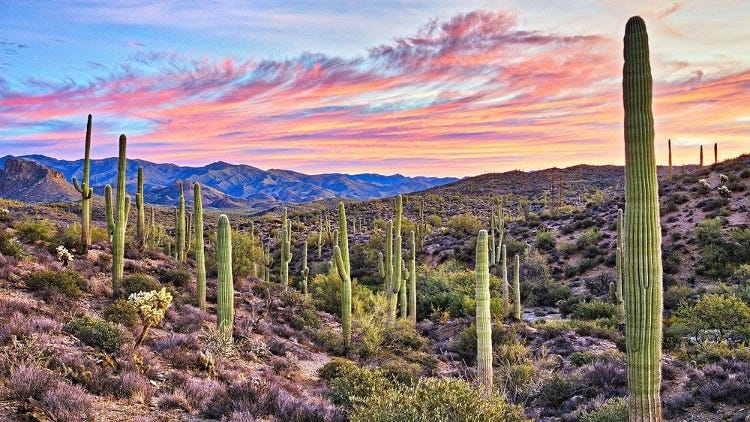
Desierto Sonorense · El corredor solar más competitivo del hemisferio norte · Esperando una decisión
Eduardo Joffroy identificó en su serie cinco pilares para la transformación de México. El segundo es Energía 2.0. Lo que sigue es mi lectura de ese pilar desde el territorio donde se construye: la práctica, el capital y la decisión.
Hay países que descubren su riqueza cuando la encuentran bajo la tierra. México la tiene encima: en el cielo despejado del desierto sonorense, en los vientos constantes del Istmo de Tehuantepec, en las mareas del Pacífico y el Golfo, en una red eléctrica que ya existe y que, con disciplina, ingenio y voluntad, podría transformarse en la columna vertebral de una economía diferente.
No estamos hablando de un recurso. Estamos hablando de una combinación de recursos que ningún país del mundo posee en los mismos términos: sol, viento, mar y frontera con la economía más grande de la historia. Todo junto. Todo disponible. Todo esperando una decisión que no llega.
China construyó su arquitectura energética sobre desiertos y regiones áridas del norte y el occidente, el Gobi, Mongolia Interior, Xinjiang, el Tíbet, convirtiendo terreno que el mundo consideraba improductivo en la base de su dominio industrial. Lo hizo con disciplina de ingeniería, ambición de largo plazo y la convicción de que quien controla la energía del futuro controla el futuro mismo. Para principios de 2026, China había instalado 2,381 gigawatts de capacidad renovable, más del 60% de su capacidad eléctrica total. Hoy fabrica el 80% de los paneles solares del mundo y domina la cadena de valor de las baterías de almacenamiento.
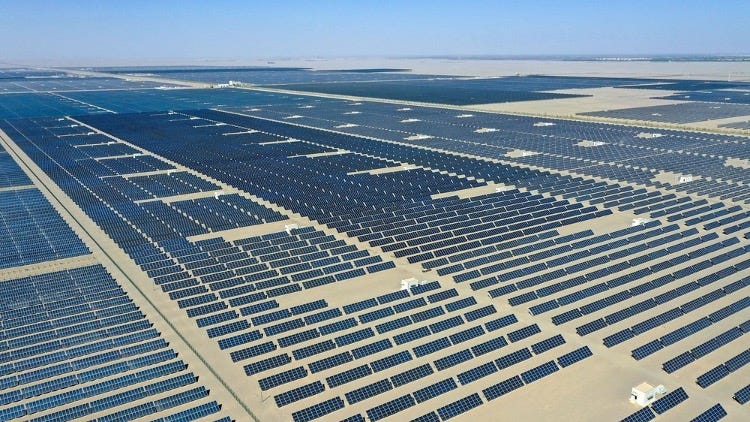
Parque solar en el desierto árido de China · Lo que se construye con disciplina de Estado y decisión de largo plazo
Pero China no se detuvo en la capacidad. Mientras otros países debatían políticas, China innovaba en la siguiente generación de la tecnología. Combina parques solares y eólicos con almacenamiento en baterías e hidrógeno verde. Instala turbinas offshore de 26 megawatts, un récord mundial alcanzado a finales de 2025. Despliega drones con inteligencia artificial para la inspección y limpieza autónoma de paneles. Experimenta con paneles flotantes en lagos y embalses para reducir la evaporación del agua. En algunas regiones áridas donde instaló sus granjas solares, el efecto de sombra redujo la evaporación y la vegetación comenzó a regresar, convirtiendo desiertos en micro-oasis. China no solo construyó una industria. Construyó una civilización energética y la itera a una velocidad que ningún otro país iguala.
México tiene todo lo que China aprovechó y más. Tiene el corredor solar más competitivo del hemisferio norte. Tiene el potencial eólico del Istmo. Tiene costas en dos océanos. Tiene frontera con la economía más grande de la historia. China habría considerado esa combinación un regalo extraordinario. La carrera no terminó. La tecnología sigue evolucionando. La ventana para convertirse en un actor serio en esta industria no se ha cerrado.
México tiene la geografía que China envidiaría. Lo que falta no es el recurso. Es la decisión de convertirlo en arquitectura.
I. Lo que ya tenemos y no estamos usando
Vale la pena nombrar lo que ya tenemos y hemos elegido no usar.
El corredor solar del norte de México, Sonora, Chihuahua, Baja California, registra más horas de sol por año que California, más que Texas, más que cualquier región de Europa. El Istmo de Tehuantepec tiene un potencial eólico que figura entre los diez más importantes del planeta. Las costas del Pacífico y el Golfo ofrecen recursos mareomotrices y de energía oceánica que permanecen prácticamente inexplorados. Y México ya tiene una red eléctrica nacional, imperfecta, subinvertida, operada con lógica política en lugar de lógica de ingeniería, pero existente. No estamos hablando de construir desde cero. Estamos hablando de transformar una plataforma que ya tiene estructura.
Entre 2015 y 2018, México celebró tres subastas de energía limpia. El precio de generación cayó de 47.7 dólares por megawatt-hora a 20.5. Más de 2,400 millones de dólares en compromisos de inversión privada. Treinta y dos proyectos adjudicados en tres rondas. El mercado no especuló, invirtió. Validó el modelo con su propio capital.
En 2018, las subastas se cancelaron. No por resultados deficientes. No por falta de interés. Por una decisión política que priorizó el control de la CFE sobre la lógica del mercado. La reforma energética que había abierto ese espacio fue revertida primero en la práctica y luego en la ley. En 2024, la contrarreforma constitucional eliminó al regulador independiente y reintegró el operador de la red a la CFE. México cayó del lugar 7 al 33 en el índice global de atractivo para inversión en energías renovables.
El recurso no desapareció. El sol siguió saliendo. El viento siguió soplando. Lo que desapareció fue la arquitectura que convertía ese recurso en energía, en inversión, en empleos, en soberanía.
II. El grifo que controlan otros
Hay un dato que rara vez aparece al centro de la conversación energética de México, y que debería estar ahí desde el principio.
México importa aproximadamente el 76% de su gas natural de Estados Unidos, el nivel más alto registrado hasta ahora y el tercer año consecutivo al alza. Ese gas alimenta plantas de generación eléctrica, industria manufacturera y consumo residencial en buena parte del país. Es una dependencia estructural construida durante décadas de decisiones que priorizaron el gas barato del norte sobre la inversión en generación propia.
En tiempos ordinarios, esa dependencia es un dato económico. En tiempos de tensión comercial, que son exactamente los tiempos que vivimos, es un instrumento de presión. El gasoducto que cruza desde Texas es un grifo que Estados Unidos puede cerrar. Probablemente no lo hará. Pero puede. Y la sola posibilidad de que pueda es suficiente para inclinar cualquier negociación antes de que empiece.
La respuesta que proponemos no es otro gasoducto ni otra fuente de dependencia. Es construir la infraestructura renovable que hace ese gas progresivamente menos necesario. Solar, eólico, almacenamiento, exportación de electricidad limpia hacia los mismos estados de Texas, Arizona y California que hoy nos venden el gas. No como sustitución inmediata sino como arquitectura de largo plazo que cambia la ecuación de poder gradual e irreversiblemente.
Imaginemos el escenario que eso hace posible. México construye la infraestructura solar, eólica y de almacenamiento que su geografía permite. Estabiliza su red con energía generada dentro de sus propias fronteras. Y porque la generación excede la demanda interna, comienza a exportar electricidad limpia hacia Texas, Arizona y California, que la necesitan para alimentar su propia transición energética y la infraestructura de inteligencia artificial.
En ese escenario, México no llega a Washington a pedir condiciones. Llega a proponer términos. No como provocación, sino como realidad estructural. Un socio energético no se trata igual que un proveedor de mano de obra. La geopolítica cambia cuando la dependencia deja de ser unilateral.
Eso no es especulación. Es lo que Noruega construyó con petróleo. Es lo que Canadá tiene con agua y electricidad. Es una arquitectura posible para México, con sol, viento y océano, si toma la decisión de construirla.
III. El comprador que ya está esperando
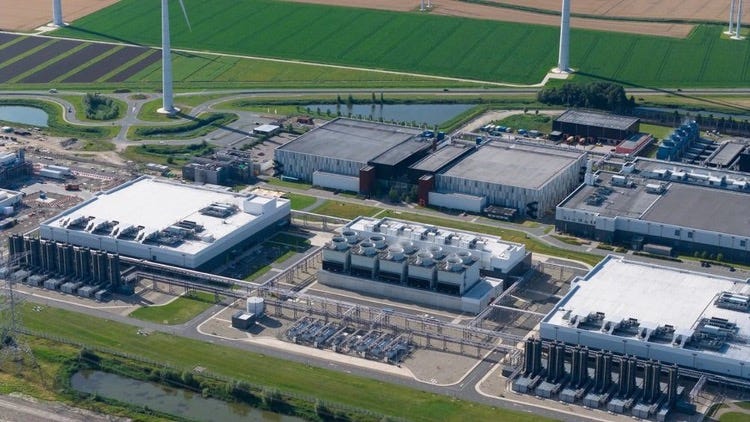
Infraestructura de data center con energía renovable integrada · El comprador que espera energía limpia y confiable a minutos de la frontera
Amazon, Microsoft, Google, OpenAI, Anthropic y Tesla no están esperando que México se decida por razones abstractas. Están buscando energía limpia, barata y estable en el hemisferio norte porque la necesitan ahora, para alimentar la infraestructura de inteligencia artificial más grande de la historia.
Para 2030, la demanda eléctrica global de la industria de IA se habrá duplicado. Los data centers que procesan esa demanda no solo consumen electricidad en cantidades que hace diez años habrían parecido ciencia ficción: también consumen agua en volúmenes extraordinarios para enfriar sus servidores. Un centro de datos de escala mediana puede requerir millones de litros de agua al día. México tiene costas, cuencas hidrológicas y regímenes climáticos que podrían integrarse inteligentemente en el diseño de esa infraestructura, pero también tiene regiones con escasez hídrica severa donde esa demanda sería insostenible. Nombrar esa condición no debilita la propuesta, la hace más honesta: no se trata de aceptar cualquier inversión, sino de diseñar la arquitectura correcta para alojar la inversión que México puede sostener y que le conviene atraer.
México está geográficamente a minutos de los centros de consumo más grandes de Norteamérica. Tiene el corredor solar más competitivo del hemisferio. Tiene costos de construcción e instalación que hoy representan una ventaja real. Esa ventaja hay que capitalizarla ahora, con claridad de que la apuesta de largo plazo no es competir eternamente por costo, sino construir con esos recursos la infraestructura que permita competir mañana con energía más barata, talento más calificado e instituciones más sólidas.
Y sin embargo, la electricidad industrial en México cuesta significativamente más que en Texas. No porque el sol cueste más aquí. Sino porque el sistema que convierte ese sol en electricidad confiable fue desmantelado por decisión política. Las empresas del nearshoring que llegaron a Nuevo León, Sonora, Bajío y otros polos de desarrollo encontraron ese problema. Algunas absorbieron el costo. Otras pusieron la segunda planta en Polonia o Vietnam. Los 40,900 millones de dólares en inversión extranjera directa que México recibió en los primeros nueve meses de 2025, el mayor monto histórico, llegaron a pesar de la energía, no gracias a ella.
El comprador está en la puerta. El recurso está disponible. Lo que falta es la arquitectura que los conecte, y la certeza de que esa arquitectura no desaparecerá con el siguiente sexenio.
IV. Diseño, no improvisación
Lo que proponemos aquí no es un programa de gobierno. Es una decisión de civilización con método detrás.
El punto de partida ya existe y tiene nombre. El 3 de febrero de 2026, la presidenta Claudia Sheinbaum presentó el Plan de Inversión en Infraestructura para el Desarrollo con Bienestar 2026-2030, construido sobre el análisis técnico y financiero de más de 1,500 proyectos. La inversión proyectada es de 5.6 billones de pesos en ocho sectores estratégicos mediante esquemas público-privados, con energía concentrando más de la mitad del total. Para 2026 se destinan 722 mil millones de pesos adicionales, equivalentes al 2% del PIB. El plan declaró la dirección y puso los recursos iniciales sobre la mesa. Lo que determina si esa dirección produce resultados duraderos es la arquitectura institucional con que se ejecute. Un plan sexenal bien intencionado, sin certeza constitucional y sin gobernanza independiente, es una oportunidad a medias. La misma inversión, con los candados correctos, puede ser el umbral de una transformación que sobrevive a quienes la inician.
No se construye en un sexenio. Se diseña para treinta años, con la misma ambición con que China diseñó su dominio solar, con la misma disciplina con que Noruega diseñó su fondo soberano, con la misma claridad constitucional con que Texas diseñó su fondo educativo en 1854. Una arquitectura que sobrevive a los gobiernos porque su lógica es más poderosa que cualquier ciclo electoral.
El primer elemento es la red como columna vertebral. México ya tiene una red eléctrica nacional. El primer paso no es construir desde cero, es invertir en transmisión con disciplina de ingeniería. Llevar la electricidad generada en el norte soleado al centro industrial, al Bajío, al Sureste. Expandir la cobertura hacia las comunidades que el sistema centralizado nunca alcanzó, con microrredes locales basadas en solar y almacenamiento. Energía como infraestructura social, no solo como insumo industrial.
El segundo elemento es la generación como industria soberana. Reactivar las subastas de energía limpia bajo certeza jurídica constitucional, no regulatoria, porque los contratos regulatorios se cancelan con cada cambio de administración y los compradores de energía a largo plazo lo saben. Abrir la generación a capital privado con CFE como operador de red y comprador de último recurso, pero sin monopolio de generación. Desarrollar el potencial eólico del Istmo con la misma seriedad con que el mundo mira al desierto sonorense.
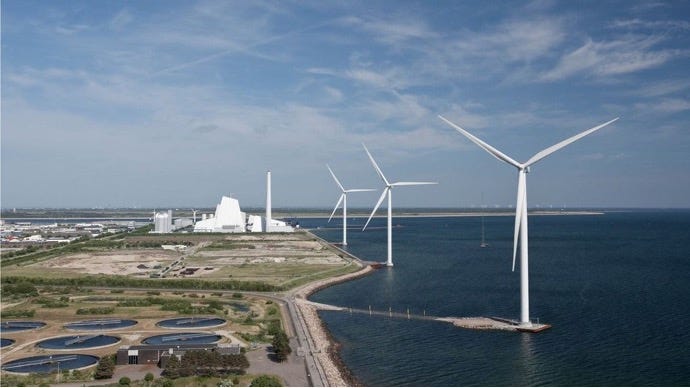
Ørsted · Dinamarca · De empresa de combustibles fósiles a líder mundial en energía renovable. El modelo existe y funciona.
El tercer elemento es la reinvención de la CFE. No alcanza con reformar: hay que repensar la institución desde sus cimientos, no solo como operadora eficiente sino como creadora de conocimiento. Ørsted en Dinamarca era una empresa de combustibles fósiles que se transformó en el mayor desarrollador de energía eólica offshore del mundo, con el gobierno danés como accionista mayoritario y un consejo con mandato fiduciario hacia los ciudadanos. Vattenfall en Suecia es propiedad 100% del Estado sueco, opera en ocho países europeos y mantiene laboratorios de innovación activos en tecnología eólica. KEPCO en Corea del Sur, un país sin recursos energéticos propios, construyó soberanía desde la ingeniería y hoy exporta tecnología a más de quince países. Los tres comparten una arquitectura: separaron la propiedad del Estado de la operación política del sistema, establecieron consejos independientes con mandato fiduciario, e incorporaron investigación y desarrollo como función central, no como adorno.
El cuarto elemento es el capital. El dinero existe, está disponible y busca activamente proyectos como el que México puede ofrecer. El Banco Mundial entregó 42,600 millones de dólares en financiamiento climático en 2024. El BID tiene comprometidos 50,000 millones para acción climática en América Latina. El capital privado institucional que los bancos multilaterales movilizan alcanzó 134,000 millones de dólares adicionales en 2024, un incremento del 33% respecto al año anterior. La certeza jurídica y la transparencia en la ejecución no son condiciones que pedimos por principio. Son las condiciones sin las cuales ninguna de esas capas se activa.
El quinto elemento es la movilidad como multiplicador. Una infraestructura energética de esta escala no solo alimenta fábricas y data centers. Alimenta la siguiente transformación: el transporte eléctrico. Camiones en el corredor fronterizo. Autobuses en las grandes ciudades. Infraestructura de carga a lo largo de las carreteras federales. Cada vehículo eléctrico que circula en México es un nuevo nodo en la arquitectura de demanda que justifica más generación renovable. Las dos transformaciones se refuerzan mutuamente.
El sexto elemento es la exportación como posicionamiento estratégico. México puede convertirse en exportador neto de electricidad limpia hacia Estados Unidos para 2032. Interconexiones de red con Texas, Arizona y California negociables bajo el marco del T-MEC. Contratos de largo plazo con los data centers que hoy buscan energía y no la encuentran en condiciones aceptables. No como gesto de buena voluntad. Como negocio. Como la señal de capital que puede convertir a México de proveedor de geografía en socio energético de América del Norte.
V. La semilla y el árbol
No estamos entregando aquí un plan de infraestructura con cifras de ingeniería y cronogramas de ejecución. Eso es trabajo para equipos técnicos, instituciones financieras y gobiernos que decidan tomarlo en serio.
Lo que estamos plantando es una semilla: la noción de que esta transformación es posible, que los recursos para ejecutarla existen, que el modelo ha sido probado en países con menos ventajas que México, y que el momento para decidirla es ahora. No porque sea conveniente. Sino porque la ventana tiene fecha de cierre.
Los fondos de infraestructura climática tienen capital comprometido con horizontes de cinco a siete años. Si México no ofrece un proyecto invertible con certeza institucional en ese horizonte, ese capital va a Chile, a Colombia, a Marruecos, a Portugal. Las decisiones de localización de los data centers de la próxima década se toman en los próximos dieciocho meses. Las cadenas de suministro del nearshoring que necesitan energía confiable para comprometer su segunda fase de inversión están evaluando opciones ahora mismo.
La ventana no es una metáfora. Tiene fecha.
Pero hay algo más importante que la urgencia del mercado. Es el México que esta decisión hace posible, y lo que ese México significa para quienes lo habitamos.
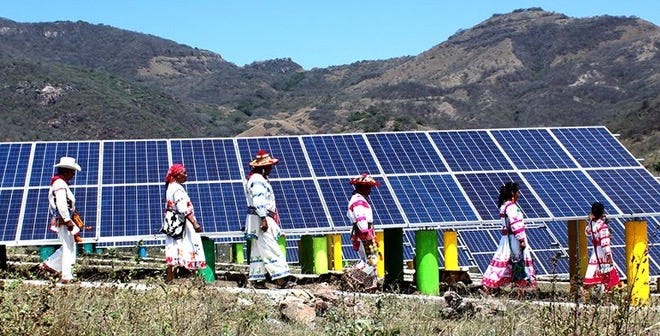
Energía solar en comunidad indígena, México · El switch que cambia más que la factura
Un México donde la energía llega a cada comunidad, no solo a los polos industriales. Donde el costo de la electricidad deja de ser una desventaja competitiva y se convierte en una ventaja estructural. Donde los ingenieros mexicanos no emigran a construir infraestructura para otros, sino que la construyen aquí, para alimentar a América del Norte desde territorio propio. Donde las empresas energéticas mexicanas son sinónimo de innovación porque tienen mandato de competir y recursos para investigar. Donde el ciudadano de a pie vive los resultados antes de entender la política, en la factura de luz, en el autobús que toma cada mañana, en la comunidad que por primera vez tiene electricidad confiable.
Esa transformación no solo cambia la economía. Cambia la narrativa. Un país que produce energía limpia para el continente, que desarrolla tecnología que el mundo necesita, que llega a cualquier negociación con algo real sobre la mesa, no se ve a sí mismo de la misma manera. Y el mundo no lo ve igual tampoco.
Donde México llega a cualquier negociación con Washington no como cliente del gasoducto sino como socio de la red. Eso no es México pidiendo un lugar en la mesa. Es México construyendo la mesa.
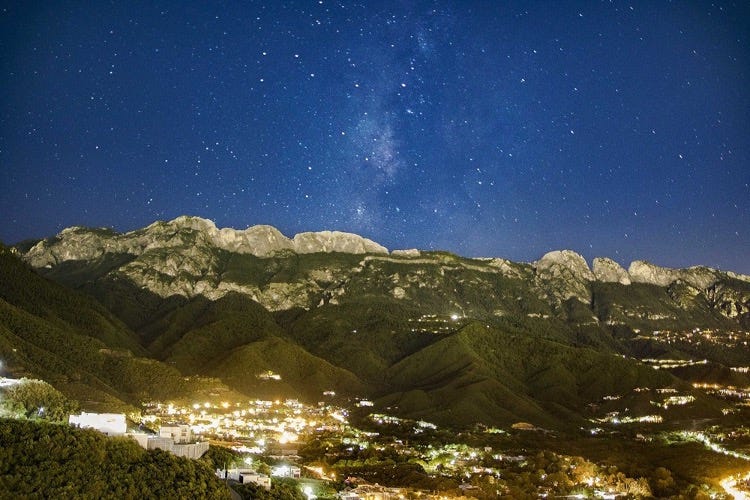
Monterrey, Nuevo León · La ciudad que ya enciende su siglo. La Sierra Madre y la Vía Láctea, testigos.
VI. La decisión
Esta ventana es diferente a las anteriores en un sentido fundamental. La presión no viene solo de adentro. Viene de compradores que necesitan lo que México tiene y que no tienen tiempo de esperar. Viene de una reconfiguración geopolítica que por primera vez en décadas pone a México en posición de proponer, no solo de responder. Viene de una tecnología, la solar, la eólica, el almacenamiento en baterías, que ha bajado de precio tan dramáticamente que hace viable lo que hace quince años era especulativo. Y viene de un plan de inversión ya declarado, con nombre y fecha, que pone los recursos iniciales sobre la mesa.
China adoptó esa tecnología con disciplina de Estado y construyó un imperio industrial que ahora innova en su siguiente generación. México tiene esa tecnología disponible, y además tiene la dotación natural que China aprovechó con esfuerzo extraordinario y que México tiene por geografía.
La pregunta ya no es si México puede encender este siglo. Los recursos están. El capital busca el proyecto. El mercado espera la energía. El modelo ha sido probado. El plan de inversión ya existe. Y la narrativa de país que esta decisión haría posible, la de un México creador y productor, no consumidor y dependiente, está disponible para quien decida escribirla.
Con el switch en la mano, las reglas cambian.
La pregunta es si México va a decidir encenderlo antes de que alguien más lo haga por él.
Esa decisión no la toma el mercado. No la toma el capital extranjero. No la toma Washington. La toma México. Hoy.
* * *
Manuel E. Familiar es fundador de Wayfinder Partners y colaborador de NA77.
Monterrey, México · Abril 2026 · NA77 · northamerican77.com
* * *
NA77 · NORTH AMERICAN 77
One region. Three nations.
The Century Mexico Can Ignite
With the switch in hand, the rules change.
By Manuel E. Familiar · NA77 Contributor · Monterrey, México · April 2026
“Investment is like water: it flows when the right conditions exist and disappears when they do not.”
Ronald Johnson, U.S. Ambassador to Mexico · Topolobampo, Sinaloa · April 23, 2026
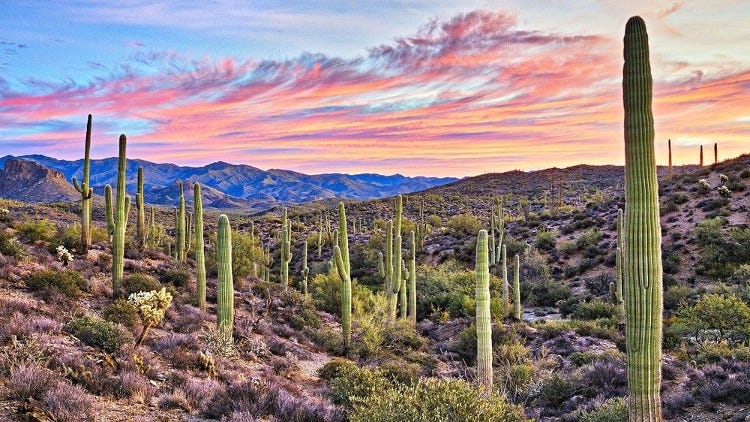
Sonoran Desert · The most competitive solar corridor in the northern hemisphere · Waiting for a decision
Eduardo Joffroy identified in his series five pillars for Mexico’s transformation. The second is Energy 2.0. What follows is my reading of that pillar from the territory where it gets built: practice, capital, and decision.
Some countries discover their wealth when they find it underground. Mexico has had it above ground all along: in the clear sky over the Sonoran desert, in the constant winds of the Isthmus of Tehuantepec, in the tides of the Pacific and the Gulf, in an electrical grid that already exists and that, with discipline, ingenuity, and will, could become the backbone of a different economy.
We are not talking about a single resource. We are talking about a combination of resources that no country in the world possesses on the same terms: sun, wind, ocean, and a border with the largest economy in history. All of it together. All of it available. All of it waiting for a decision that has not come.
China built its energy architecture on deserts and arid regions across its north and west, the Gobi, Inner Mongolia, Xinjiang, Tibet, converting terrain the world considered unproductive into the foundation of its industrial dominance. It did so with engineering discipline, long-term ambition, and the conviction that whoever controls the energy of the future controls the future itself. By early 2026, China had installed 2,381 gigawatts of renewable capacity, more than 60% of its total power. Today it manufactures 80% of the world’s solar panels and dominates the battery storage value chain.
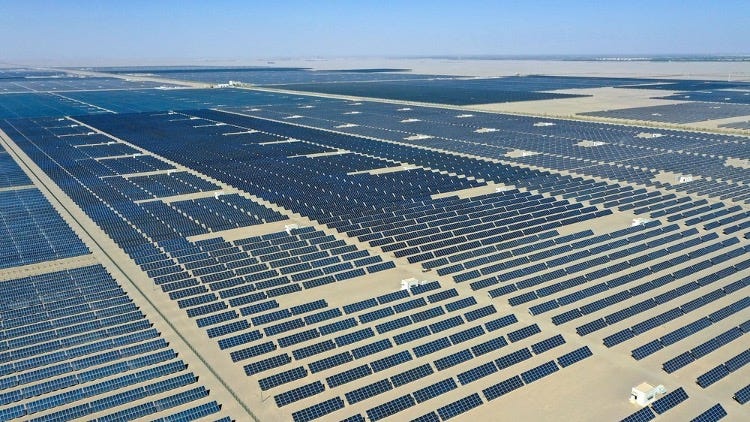
Solar farm in China’s arid desert · What gets built with state discipline and long-term decision
But China did not stop at capacity. While other countries debated policy, China was innovating on the next generation of the technology. It now combines solar and wind farms with battery storage and green hydrogen production. It installed a 26-megawatt offshore wind turbine in late 2025, breaking every global record for unit capacity. It deploys AI-guided drones for autonomous inspection and cleaning of solar panels. It experiments with floating solar arrays on lakes and reservoirs to reduce water evaporation. In some arid regions where it built its solar farms, the shading effect reduced evaporation and vegetation began returning, turning deserts into micro-oases. China did not build an industry. It built an energy civilization and is iterating on it at a pace no other country is matching.
Mexico has everything China leveraged and more. It has the most competitive solar corridor in the northern hemisphere. It has the wind potential of the Isthmus. It has coastlines on two oceans. It has a border with the largest economy in history. China would have considered that combination an extraordinary gift. The race is not over. The technology is still evolving. The window to become a serious player in this industry has not closed.
Mexico has the geography China would envy. What is missing is not the resource. It is the decision to convert it into architecture.
I. What We Already Have and Are Not Using
It is worth naming what we already have and have chosen not to use.
The solar corridor of northern Mexico, Sonora, Chihuahua, Baja California, records more sun hours per year than California, more than Texas, more than any region in Europe. The Isthmus of Tehuantepec has wind potential that ranks among the ten most important on the planet. The Pacific and Gulf coasts offer tidal and ocean energy resources that remain almost entirely unexplored. And Mexico already has a national electricity grid, imperfect, underinvested, operated with political logic rather than engineering logic, but existing. We are not talking about building from zero. We are talking about transforming a platform that already has structure.
Between 2015 and 2018, Mexico held three clean energy auctions. The generation price fell from $47.7 per megawatt-hour to $20.5. More than $2.4 billion in private investment commitments. Thirty-two projects awarded across three rounds. The market did not speculate, it invested. It validated the model with its own capital.
In 2018, the auctions were cancelled. Not for poor results. Not for lack of interest. By a political decision that prioritized CFE control over market logic. The energy reform that had opened that space was reversed first in practice and then in law. In 2024, the constitutional counter-reform eliminated the independent regulator and reintegrated the grid operator into CFE. Mexico fell from 7th to 33rd in the global renewable energy investment attractiveness index.
The resource did not disappear. The sun kept rising. The wind kept blowing. What disappeared was the architecture that converted that resource into energy, into investment, into jobs, into sovereignty.
II. The Spigot Others Control
There is a figure that rarely sits at the center of Mexico’s energy conversation, and that should have been there from the start.
Mexico imports approximately 76% of its natural gas from the United States, the highest level ever recorded and the third consecutive year of increases. That gas feeds power generation plants, manufacturing industry, and residential consumption across much of the country. It is a structural dependency built over decades of decisions that prioritized cheap gas from the north over investment in domestic generation.
In ordinary times, that dependency is an economic fact. In times of commercial tension, which is exactly the time we are living, it is a pressure instrument. The pipeline that crosses from Texas is a spigot the United States can close. It probably will not. But it can. And the mere possibility that it can is enough to tilt any negotiation before it begins.
The response we propose is not another pipeline or another form of dependency. It is to build the renewable infrastructure that makes that gas progressively less necessary. Solar, wind, storage, and the export of clean electricity toward the same states of Texas, Arizona, and California that today sell us the gas. Not as immediate substitution but as a long-term architecture that changes the power equation gradually and irreversibly.
Mexico builds the solar, wind, and storage infrastructure its geography allows. It stabilizes its grid with energy generated within its own borders. And because generation exceeds domestic demand, it begins exporting clean electricity toward Texas, Arizona, and California, which need it urgently to power their own energy transition and artificial intelligence infrastructure.
In that scenario, Mexico does not arrive in Washington to ask for terms. It arrives to propose them. Not as provocation, but as structural reality. An energy partner is not treated the same as a labor provider. Geopolitics changes when dependency stops being unilateral. That is what Norway built with oil. It is what Canada has with water and electricity. It is an architecture Mexico can build with sun, wind, and ocean, if it makes the decision to do so.
III. The Buyer Already Waiting
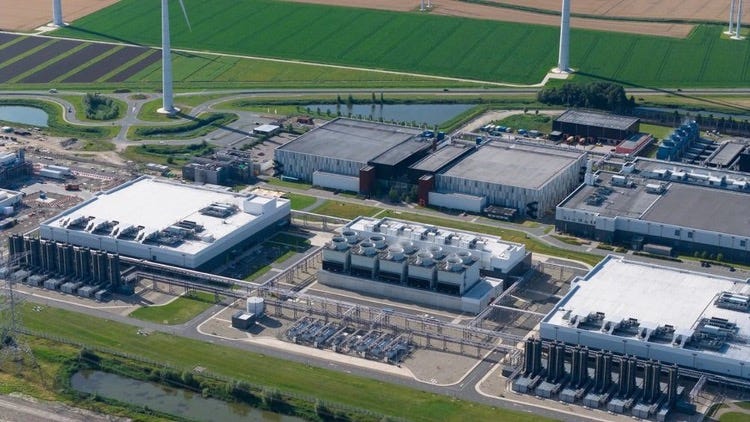
Data center infrastructure with integrated renewable energy · The buyer waiting for clean, reliable power minutes from the border
Amazon, Microsoft, Google, OpenAI, Anthropic, and Tesla are not waiting for Mexico to decide for abstract reasons. They are looking for clean, affordable, and stable energy in the northern hemisphere because they need it now, to power the largest artificial intelligence infrastructure in history.
By 2030, global electricity demand from the AI industry will have doubled. The data centers that process that demand do not only consume electricity at scales that would have seemed like science fiction a decade ago: they also consume water in extraordinary volumes to cool their servers. A mid-scale data center can require millions of liters of water per day. Mexico has coastlines, hydrological basins, and climate regimes that could be intelligently integrated into the design of that infrastructure, but it also has regions of severe water scarcity where that demand would be unsustainable. Naming that condition does not weaken the proposal, it makes it more honest: the aim is not to accept any investment on any terms, but to design the right architecture to host the investment Mexico can sustain and that serves its long-term interest.
Mexico is geographically minutes from the largest consumption centers in North America. It has the most competitive solar corridor in the hemisphere. It has construction and installation costs that today represent a real advantage. That advantage must be capitalized now, with the clarity that the long-term bet is not to compete forever on cost, but to use those resources to build the infrastructure that allows Mexico to compete tomorrow on cheaper energy, more skilled talent, and stronger institutions.
And yet industrial electricity in Mexico costs significantly more than in Texas. Not because the sun costs more here. But because the system that converts that sun into reliable electricity was deliberately dismantled. The nearshoring companies that came to Nuevo León, Sonora, the Bajío, and other industrial corridors found that problem. Some absorbed the cost. Others placed their second plant in Poland or Vietnam. The $40.9 billion in foreign direct investment Mexico received in the first nine months of 2025, the highest amount ever recorded, arrived in spite of the energy situation, not because of it.
The buyer is at the door. The resource is available. What is missing is the architecture that connects them, and the certainty that that architecture will not disappear with the next administration.
IV. Design, Not Improvisation
What we are proposing here is not a government program. It is a civilizational decision with method behind it.
The starting point already exists and has a name. On February 3, 2026, President Claudia Sheinbaum presented the Infrastructure Investment Plan for Development with Wellbeing 2026-2030, built on the technical and financial analysis of more than 1,500 projects. The projected investment is 5.6 trillion pesos across eight strategic sectors through public-private schemes, with energy concentrating more than half the total. The plan declared the direction and put the initial resources on the table. What determines whether that direction produces lasting results is the institutional architecture with which it is executed. A well-intentioned six-year plan, without constitutional certainty and without independent governance, is a half-opportunity. The same investment, with the right institutional safeguards, can be the threshold of a transformation that outlasts those who initiate it.
It is not built in one administration. It is designed for thirty years, with the same ambition with which China designed its solar dominance, with the same discipline with which Norway designed its sovereign fund, with the same constitutional clarity with which Texas designed its education fund in 1854. An architecture that outlasts governments because its logic is more powerful than any electoral cycle.
The first element is the grid as backbone. Invest in transmission with engineering discipline. Carry the electricity generated in the sunny north to the industrial center, to the Bajío, to the Southeast. Expand coverage toward the communities the centralized system never reached, with local microgrids based on solar and storage. Energy as social infrastructure, not only as an industrial input.
The second element is generation as sovereign industry. Reactivate clean energy auctions under constitutional legal certainty. Open generation to private capital with CFE as grid operator and buyer of last resort, but without a generation monopoly. Develop the wind potential of the Isthmus. Build the storage capacity that converts intermittent generation into reliable supply.
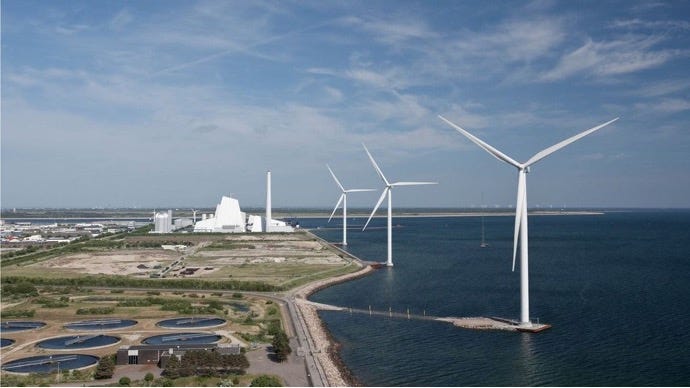
Ørsted · Denmark · From fossil fuel company to world leader in renewable energy. The model exists and works.
The third element is the reinvention of CFE. Ørsted in Denmark was a fossil fuel company that transformed itself into the world’s largest offshore wind developer, with the Danish government as majority shareholder and a board carrying a fiduciary mandate toward citizens. Vattenfall in Sweden is 100% state-owned, operates across eight European countries, and runs active innovation laboratories in wind technology. KEPCO in South Korea built sovereignty through engineering and today exports technology to more than fifteen countries. All three share one architecture: they separated state ownership from the political operation of the system, established independent boards with fiduciary mandates, and made research and development a central function, not an ornament.
The fourth element is capital. The money exists, it is available, and it is actively looking for projects like what Mexico can offer. The World Bank delivered $42.6 billion in climate financing in 2024. The IDB has $50 billion committed for climate action in Latin America. The institutional private capital that multilateral banks mobilize reached $134 billion in 2024, a 33% increase over the prior year. Legal certainty and execution transparency are not conditions we request on principle. They are the conditions without which none of those layers activates.
The fifth element is mobility as multiplier. An energy infrastructure of this scale does not only power factories and data centers. It powers the next transformation: electric transportation. Electric trucks on the border corridor. Electric buses in major cities. Charging infrastructure along the federal highways. Every electric vehicle on Mexican roads is a new node in the demand architecture that justifies more renewable generation. The two transformations reinforce each other.
The sixth element is export as strategic positioning. Mexico can become a net exporter of clean electricity to the United States by 2032. Grid interconnections with Texas, Arizona, and California negotiable under the USMCA framework. Long-term contracts with the data centers that today seek energy and cannot find it on acceptable terms. Not as a gesture of goodwill. As business. As the capital signal that can transform Mexico from geography provider to energy partner in North America.
V. The Seed and the Tree
We are not delivering here an infrastructure plan with engineering figures and execution timelines. That is work for technical teams, financial institutions, and governments that decide to take it seriously.
What we are planting is a seed: the notion that this transformation is possible, that the resources to execute it exist, that the model has been proven in countries with fewer advantages than Mexico, and that the moment to decide it is now. Not because it is convenient. But because the window has a closing date.
Climate infrastructure funds have capital committed on five-to-seven-year investment horizons. If Mexico does not offer an investable project with institutional certainty within that window, that capital goes to Chile, Colombia, Morocco, Portugal. The data center location decisions for the next decade are being made in the next eighteen months. The nearshoring supply chains that need reliable energy to commit their second phase of investment are evaluating options right now.
The window is not a metaphor. It has a date.
But there is something more important than market urgency. It is the Mexico this decision makes possible, and what that Mexico means for those of us who live in it.
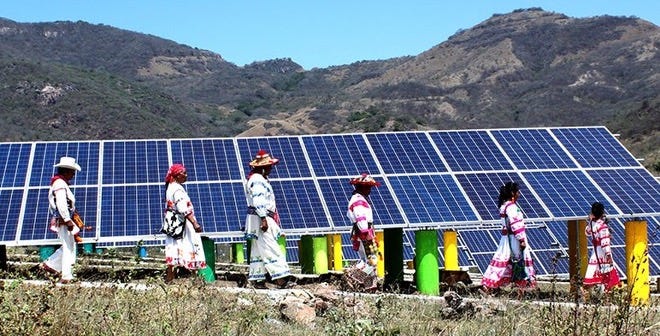
Solar energy in an indigenous community, Mexico · The switch that changes more than the electricity bill
A Mexico where energy reaches every community, not only the industrial corridors. Where the cost of electricity stops being a competitive disadvantage and becomes a structural advantage. Where Mexican engineers do not emigrate to build infrastructure for others, but build it here, to power North America from their own territory. Where energy companies are synonymous with innovation because they have a mandate to compete and resources to research. Where the citizen on the street lives the results before understanding the policy, in the electricity bill, in the bus taken every morning, in the community that for the first time has reliable power.
That transformation does not only change the economy. It changes the narrative. A country that produces clean energy for the continent, that develops technology the world needs, that arrives at any negotiation with something real on the table, does not see itself the same way. And the world does not see it the same way either.
Where Mexico arrives at any negotiation with Washington not as a pipeline customer but as a partner in the grid. That is not Mexico asking for a seat at the table. It is Mexico building the table.
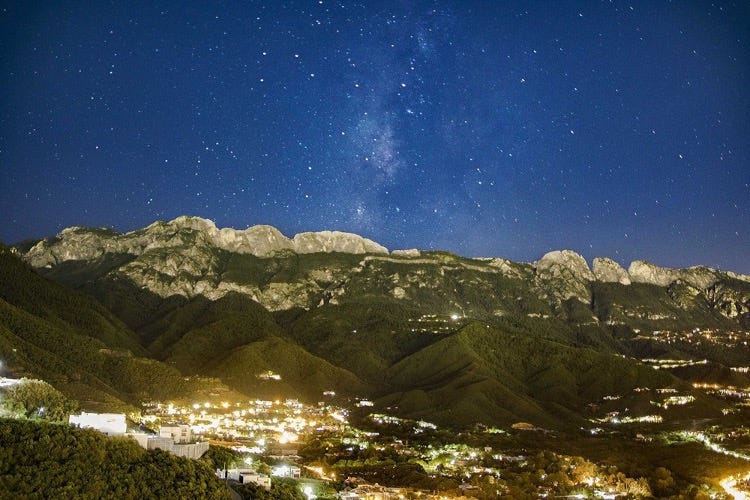
Monterrey, Nuevo León · The city already igniting its century. The Sierra Madre and the Milky Way, witnesses.
VI. The Decision
This window is different from the ones before it in one fundamental respect. The pressure does not come from within alone. It comes from buyers who need what Mexico has and do not have time to wait. It comes from a geopolitical reconfiguration that for the first time in decades puts Mexico in position to propose, not merely respond. It comes from a technology, solar, wind, battery storage, that has fallen so dramatically in cost that it makes viable what fifteen years ago was speculative. And it comes from an investment plan already declared, with a name and a date, that puts the initial resources on the table.
China adopted that technology with state discipline and built an industrial empire that is now innovating on its next generation. Mexico has that technology available, and also has the natural endowment that China leveraged with extraordinary effort and that Mexico has simply by geography.
The question is no longer whether Mexico can ignite this century. The resources are there. The capital is looking for the project. The market is waiting for the energy. The model has been proven. The investment plan already exists. And the national narrative this decision would make possible, that of a Mexico that creates and produces rather than consumes and depends, is available to whoever decides to write it.
With the switch in hand, the rules change.
The question is whether Mexico will decide to ignite it before someone else does it for them.
That decision is not made by the market. Not by foreign capital. Not by Washington. It is made by Mexico. Today.